

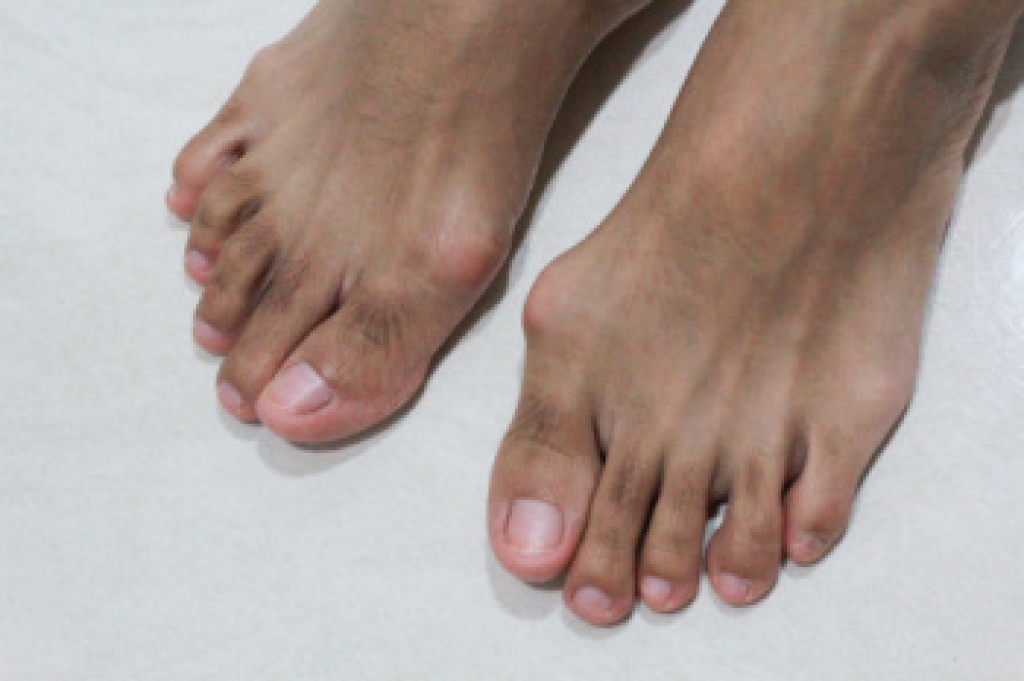
A bunion is a bony bump that forms at the base of the big toe. It develops as the top of the big toe shifts toward the second toe, pushing the joint out of alignment. The bump can become red, swollen, and tender. Other symptoms include aching pain, stiffness, and a burning feeling. Some patients also develop corns where the toes rub together. Bunions can limit shoe choices and make walking difficult. The condition tends to progress gradually, although the rate of change differs among patients. Some bunions remain painless, while others interfere with work, exercise, or performing daily activities.
An inherited foot structure is a factor in bunion development. Certain foot shapes place extra stress on the joint at the base of the big toe. Shoes with a narrow toe box do not directly create the deformity, but they often place added pressure on the area. Wearing high heels may also crowd the toes and worsen discomfort. Because a bunion involves changes in bone alignment, the visible bump does not disappear on its own. Seeking help from a podiatrist when symptoms begin can help to protect the joint.
A podiatrist can examine the foot, assess joint movement, and observe how the patient walks. X-rays can show the position of the bones and the severity of the bunion. Treatment is based on the patient’s pain, activity level, and joint condition. A podiatrist can recommend fitted shoes with a wide toe box. Treatment also includes protective padding or custom orthotics to reduce pressure and improve foot function. When these measures do not provide enough relief, the podiatrist can discuss whether surgery is appropriate. Bunion surgery can realign the bones, correct damaged tissues, and reduce pain. The procedure selected depends on the bunion’s structure and severity. If you are experiencing pain from a bunion, it is suggested that you schedule an appointment with a podiatrist for effective relief, treatment, and management solutions.
If you are suffering from bunion pain, contact Dr. Stephan J. LaPointe of Georgia Foot & Ankle Specialists . Our doctor can provide the care you need to keep you pain-free and on your feet.
What Is a Bunion?
Bunions are painful bony bumps that usually develop on the inside of the foot at the joint of the big toe. As the deformity increases over time, it may become painful to walk and wear shoes. Women are more likely to exacerbate existing bunions since they often wear tight, narrow shoes that shift their toes together. Bunion pain can be relieved by wearing wider shoes with enough room for the toes.
Causes
- Genetics – some people inherit feet that are more prone to bunion development
- Inflammatory Conditions - rheumatoid arthritis and polio may cause bunion development
Symptoms
- Redness and inflammation
- Pain and tenderness
- Callus or corns on the bump
- Restricted motion in the big toe
In order to diagnose your bunion, your podiatrist may ask about your medical history, symptoms, and general health. Your doctor might also order an x-ray to take a closer look at your feet. Nonsurgical treatment options include orthotics, padding, icing, changes in footwear, and medication. If nonsurgical treatments don’t alleviate your bunion pain, surgery may be necessary.
If you have any questions, please feel free to contact our office located in Rome, GA . We offer the newest diagnostic and treatment technologies for all your foot care needs.